Project Screenshots (8)
Screenshots (8)
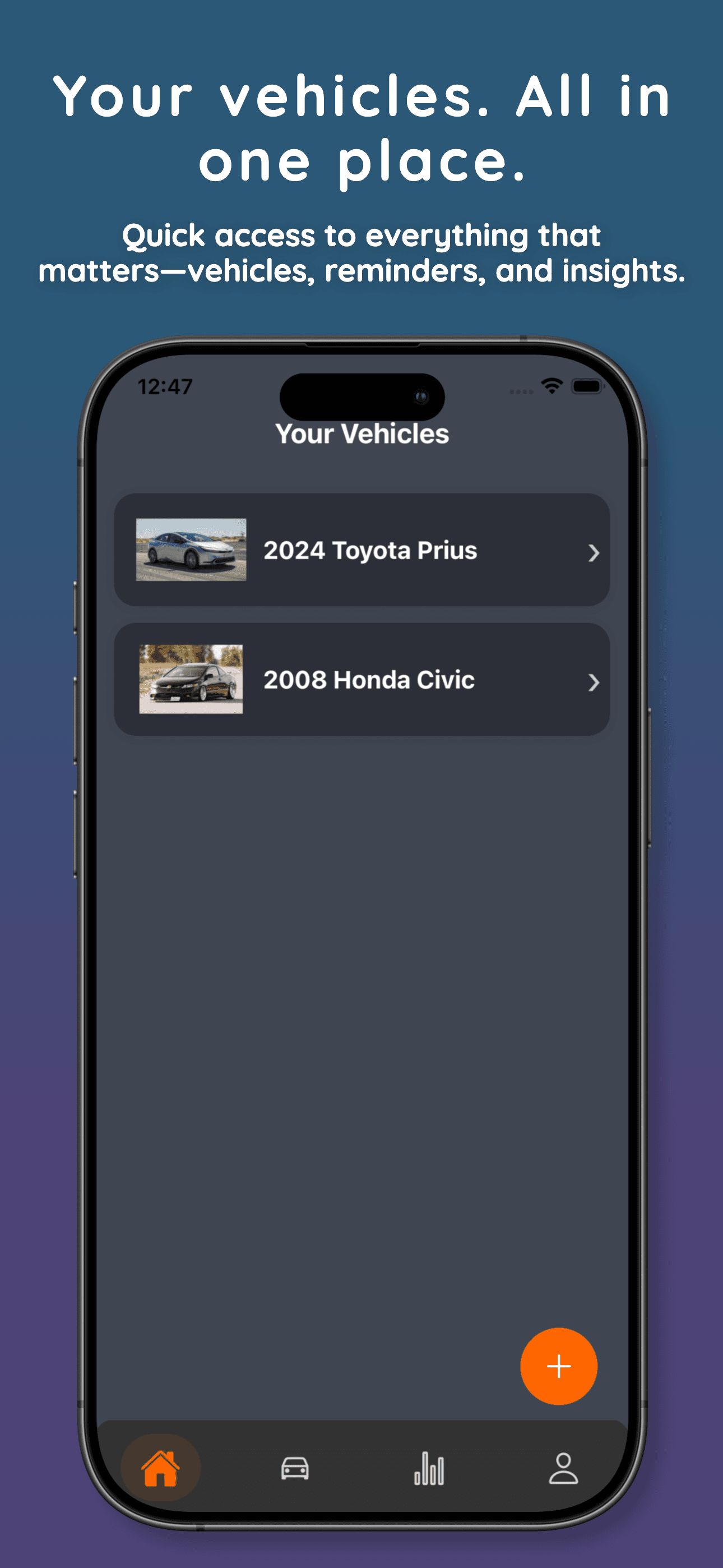
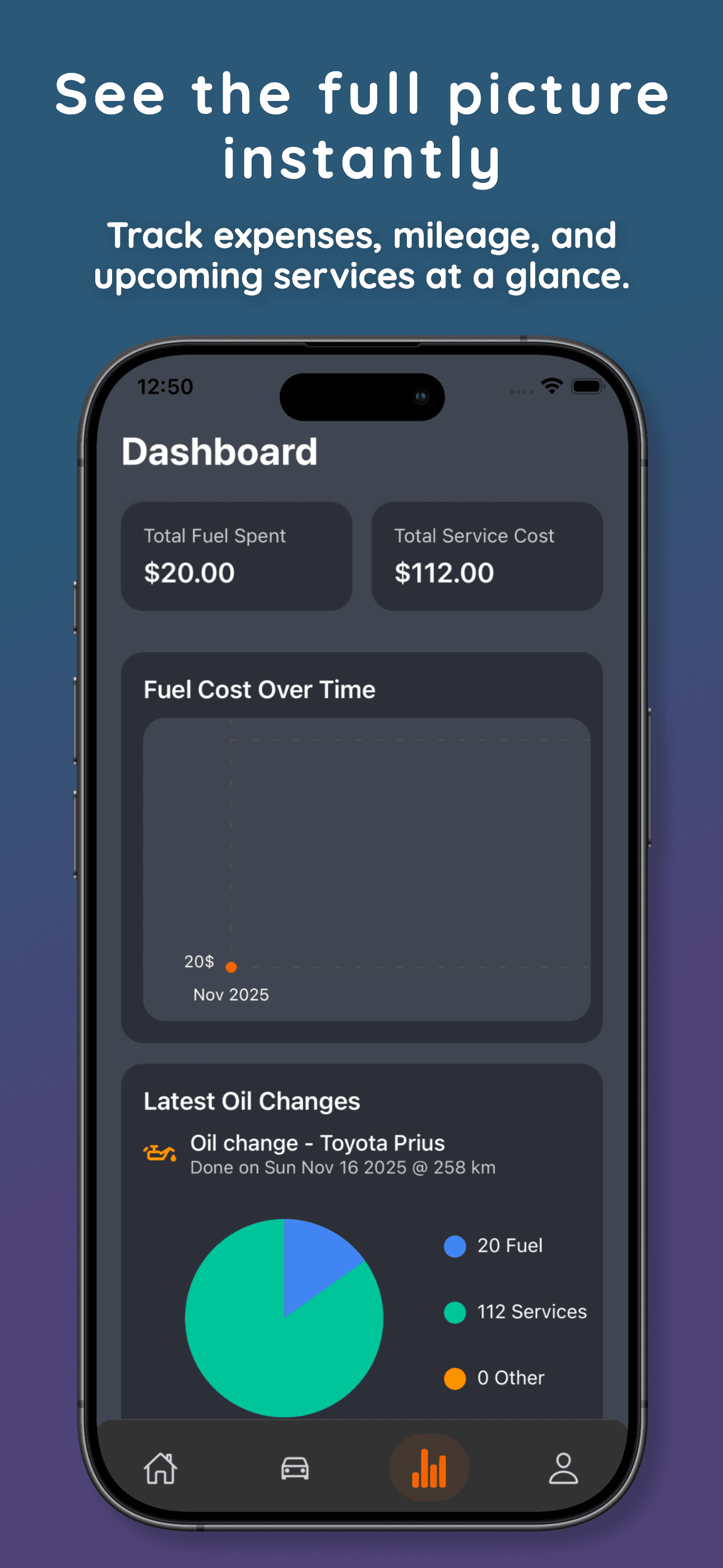
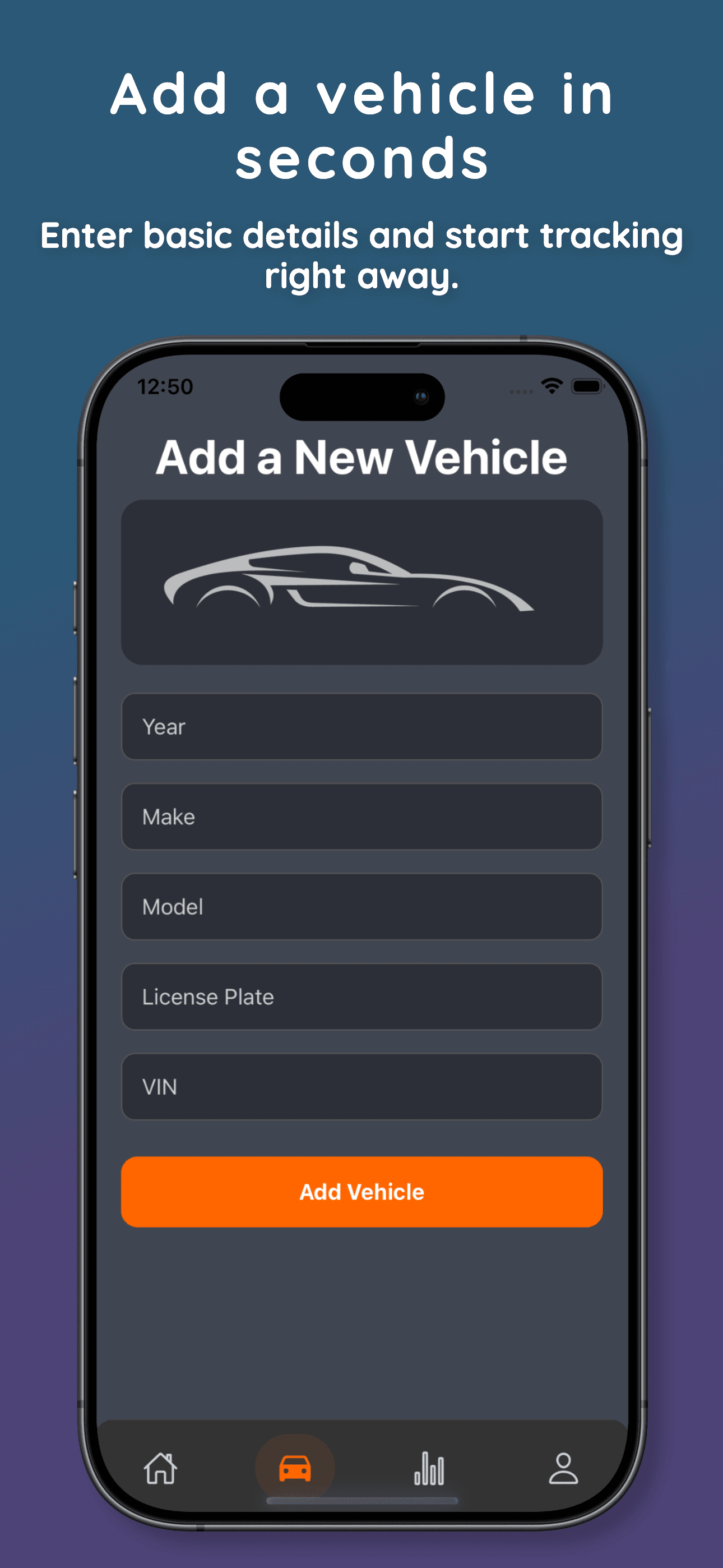
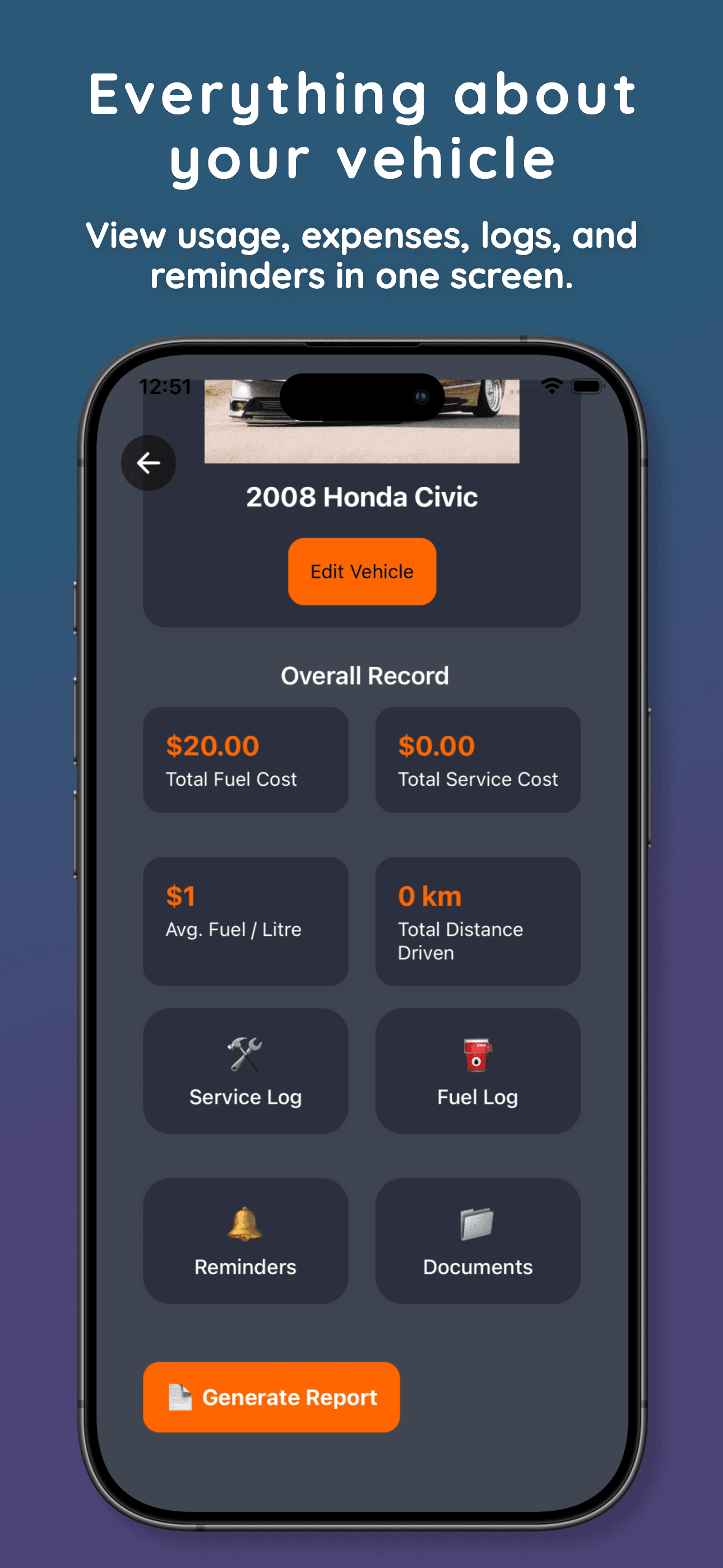
Overview
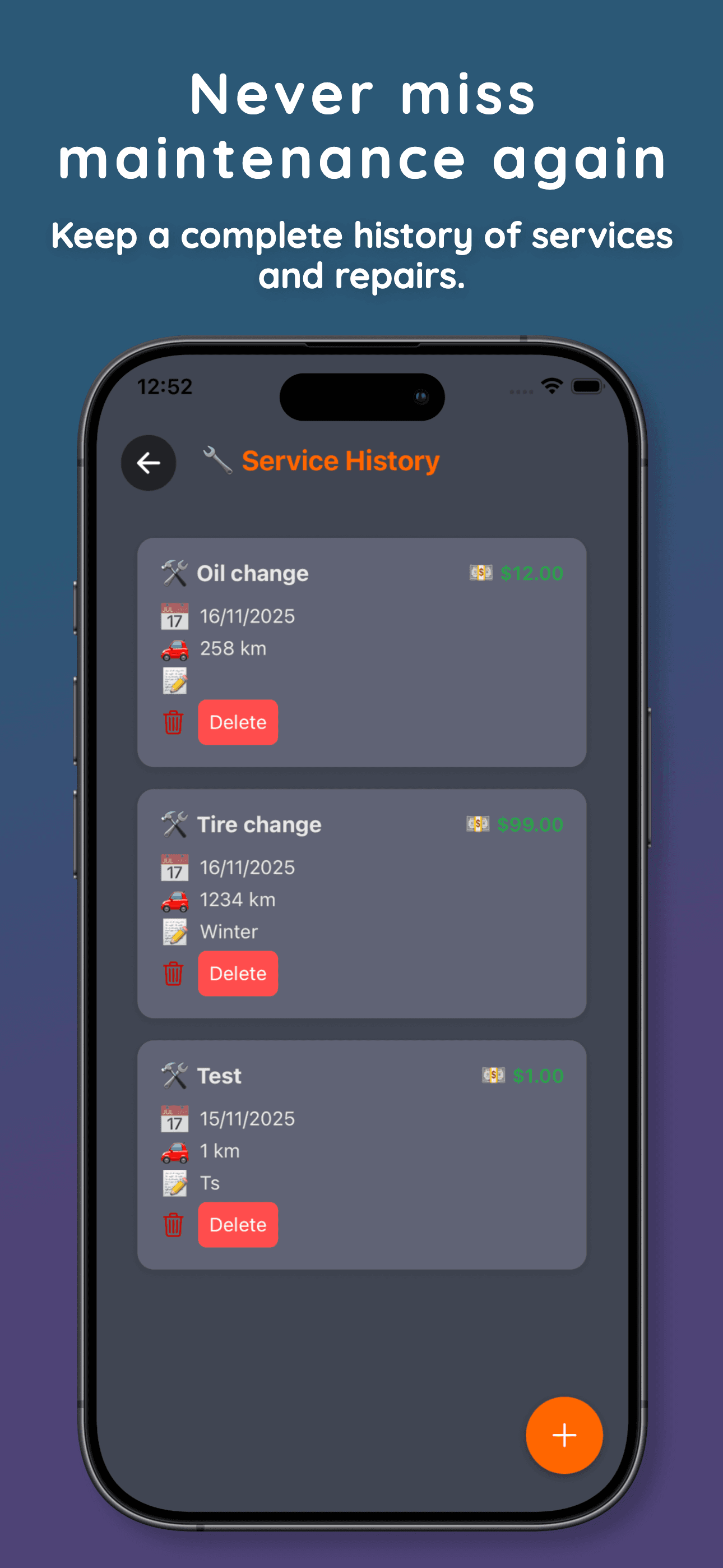
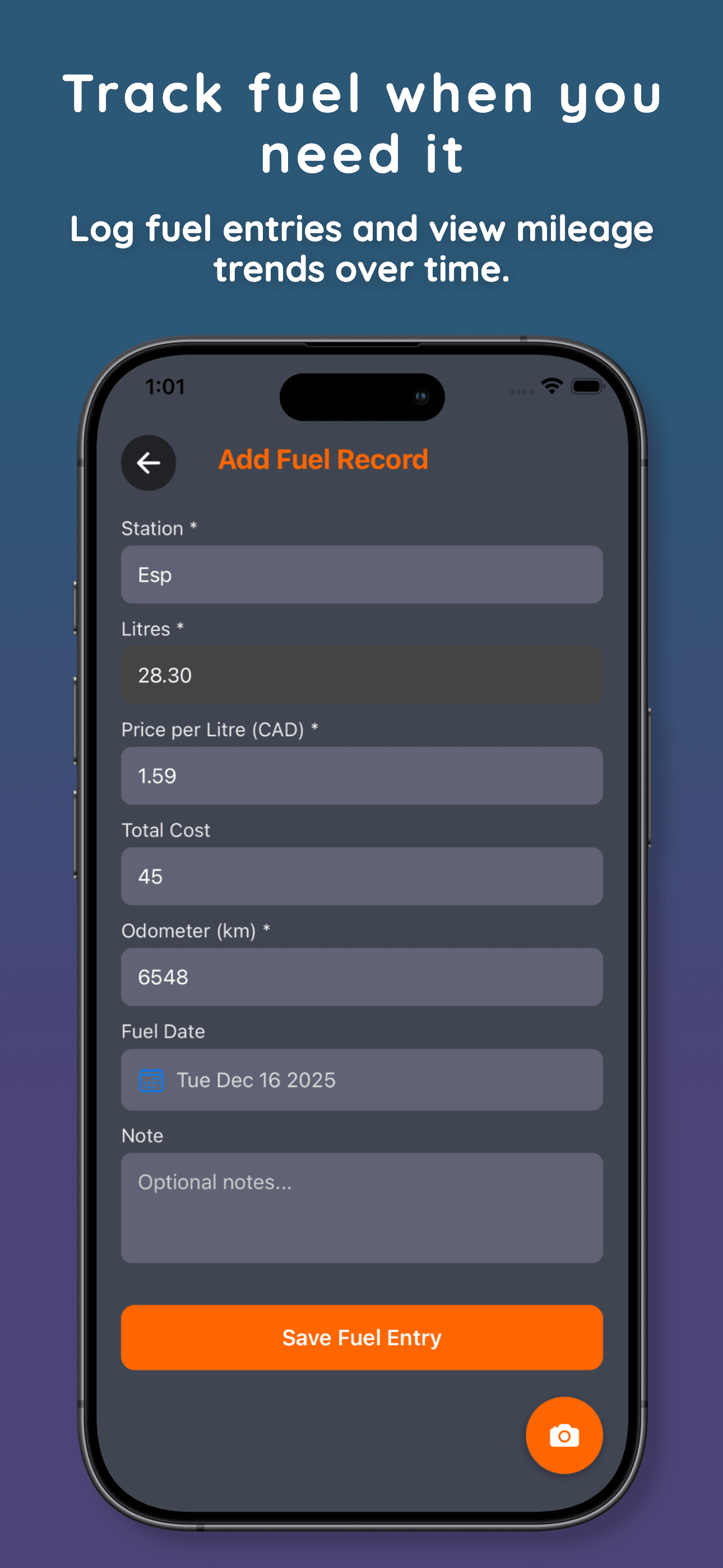
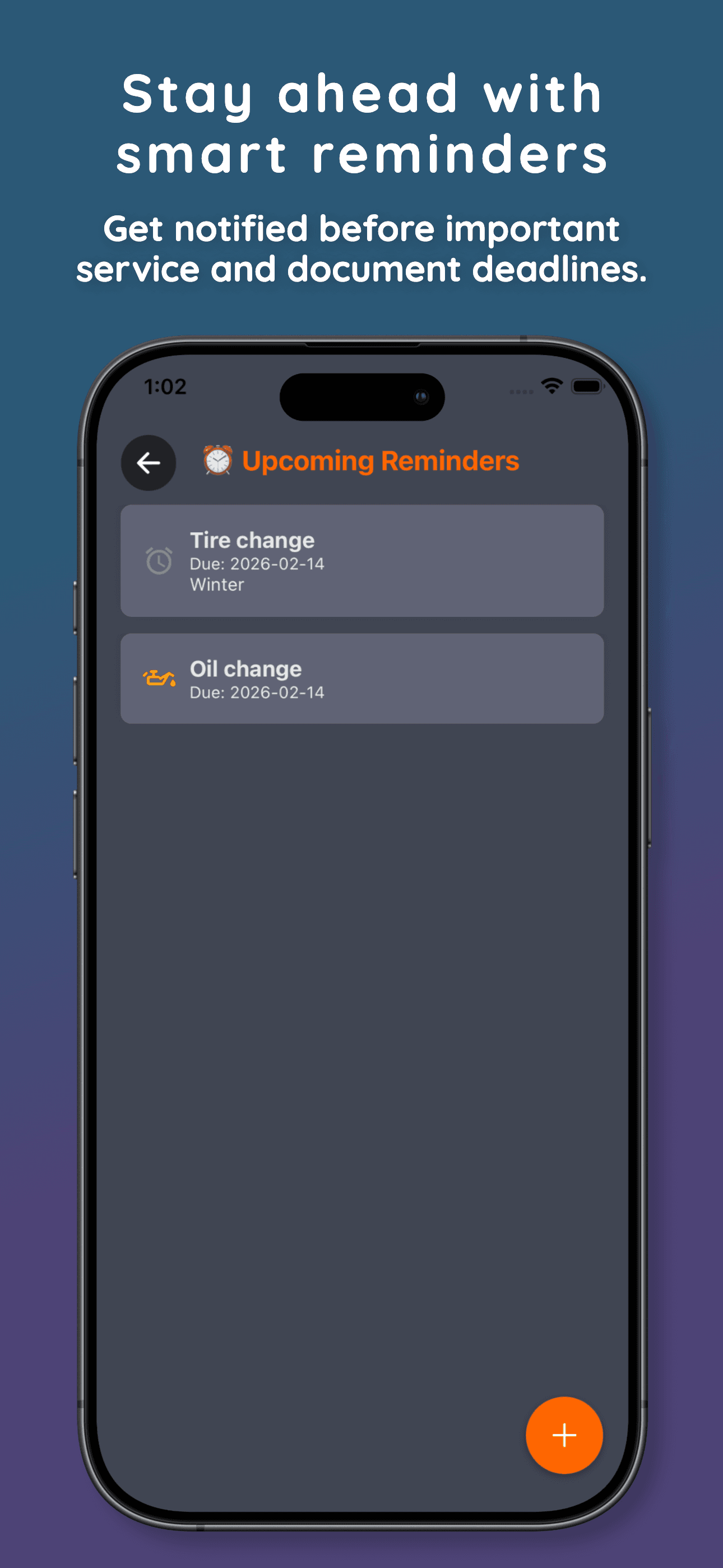
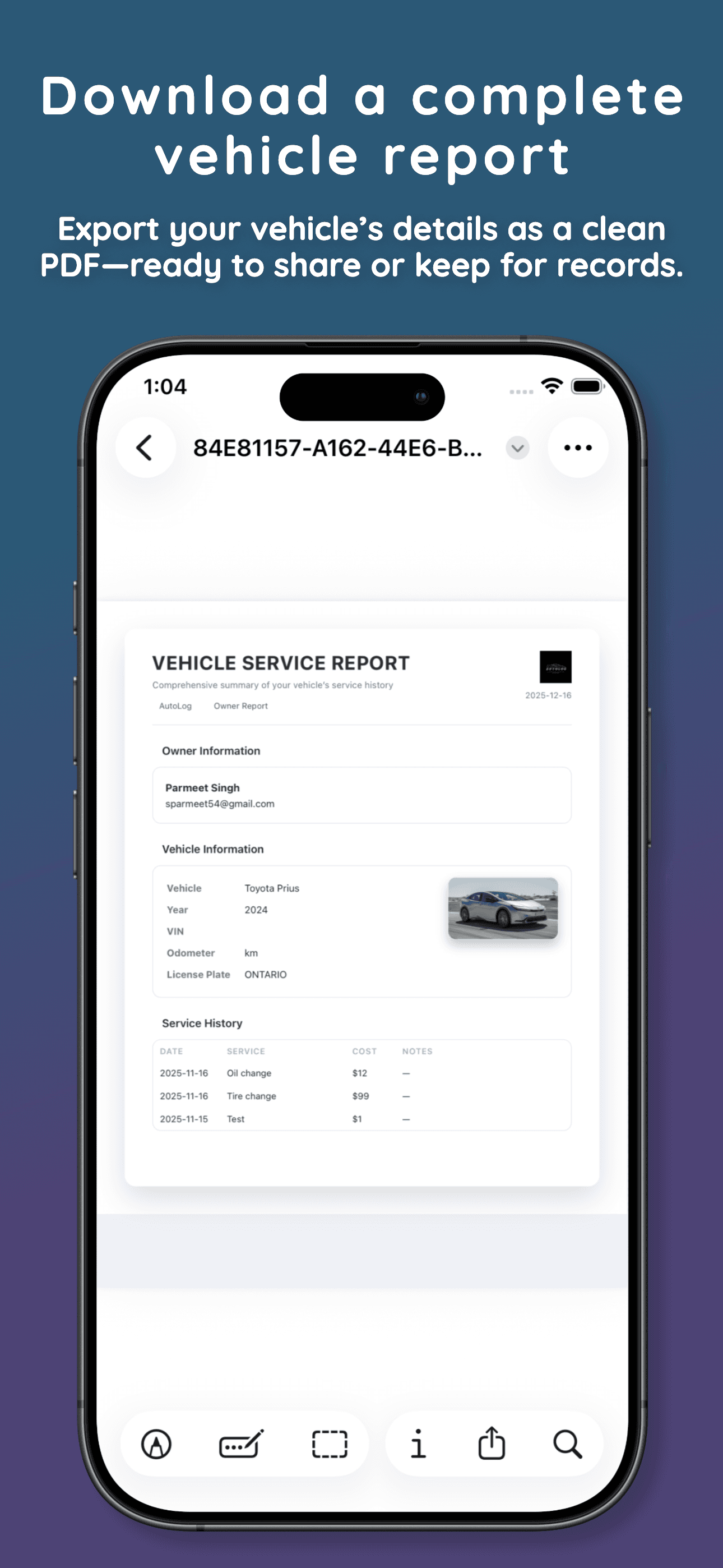
AutoLog is a vehicle management and analytics platform built to help users track fuel usage, maintenance history, and long-term vehicle costs in a single application. The goal of AutoLog is to replace manual tracking through receipts and notes with a structured, data-driven system that provides real insights over time.
How It Started
The idea for AutoLog started from a common real-world problem: vehicle-related information such as fuel bills, service records, and repair costs are usually scattered across paper receipts, messages, and multiple apps. This makes it difficult for vehicle owners to understand actual ownership costs or track maintenance history reliably.
The Problem
Most vehicle owners do not have a centralized and reliable way to track fuel consumption, maintenance expenses, and service history. Manual tracking is time-consuming, error-prone, and provides little visibility into long-term costs or usage patterns.
The Solution
AutoLog centralizes all vehicle-related activity into a single platform. Users can log fuel, services, and expenses, scan receipts using OCR to reduce manual input, and view analytics dashboards that highlight spending patterns and long-term ownership costs.
Market Impact
AutoLog is designed for everyday vehicle owners, ride-share drivers, and small fleet users who want better visibility into vehicle expenses. By organizing data and presenting it in a clear way, AutoLog helps users make informed decisions about maintenance, usage, and cost optimization.
My Role
I designed and developed AutoLog end-to-end, including frontend development, backend APIs, database design, authentication, OCR integration, and deployment. I also handled performance optimization and ongoing feature improvements.
Challenges & Decisions
Key challenges included handling OCR accuracy across different receipt formats, designing a data model that supports both structured and unstructured data, and ensuring secure authentication and data storage. These were addressed through iterative testing, schema optimization, and careful API design.
Architecture & System Design
AutoLog uses a React Native frontend to support cross-platform mobile development. The backend is built with Node.js and exposes REST APIs for data handling and business logic. PostgreSQL is used for structured relational data such as vehicles and expenses, while MongoDB supports flexible logging and analytics data. Firebase Authentication manages user identity and social login, and Firebase Realtime Database is used for real-time data synchronization where required.